Best Japan Tours: 7 Perfect Picks for an Amazing 2026 Trip
Plan the best Japan tours in 2026 with confidence. Tokyo and Kyoto routes, shinkansen tips, cherry-blossom dates, and how to book the right local guide.
The best Japan tours stitch together a 2,000-year imperial capital, the most punctual rail network on Earth, and a food culture that rewards 30-minute queues into a single coherent itinerary. This guide covers the seven things first-time travelers want to know in 2026: which regions to prioritize, when to ride the bullet train instead of fly, what a fair price looks like, and how to book a guide who actually knows Kyoto outside cherry-blossom hours. Get the sequence right and a Japan tour turns into the longest trip you'll plan twice.
Key Takeaways: The best Japan tours combine Tokyo, Kyoto, Osaka, and a Mount Fuji day, run from March through November, and cost €60 to €260 per person depending on transport and group size. Visit late March to mid-April for cherry blossoms or October to November for autumn colors, prebook the JR Pass, and use the shinkansen for any city change.
Japan is a 6,852-island archipelago of UNESCO World Heritage cities covering Buddhist temples, Shinto shrines, and a single working castle dating to 1611. Our top 10 destinations 2026 guide covers how Japan pairs with neighboring countries, and our tour-vetting guide is worth reading before you book any operator abroad.
1. When to Visit on a Japan Tour
The Japan tour season runs March through November, with the strongest weather and least pressure on the temples in late March-April (sakura) and October-November (koyo autumn colors). Daytime temperatures sit between 16 and 24 degrees Celsius, Tokyo's parks fill before 9 a.m., and Kyoto's Fushimi Inari is walkable without the midday crush. July and August also work, but expect 35-degree heat with high humidity and a typhoon risk through September.
Off-season visits from December through February are slower-paced and the best time for a winter ski tour in Hokkaido or a snow-monkey day in Nagano. Plan three or more nights so a single typhoon does not derail the trip. The Japan National Tourism Organization publishes the official cherry-blossom forecast each February for the season ahead.
2. The Regions: How to Pick Your Japan Tour Route
Three rules for picking your Japan tour route:
- The Golden Route splits into three hubs: Tokyo for modern life and Edo history, Kyoto for temples and ryokan, Osaka for food and a Universal Studios day.
- Distances on the map are large, the shinkansen is fast. Tokyo to Kyoto covers 450 km in 2 hours 14 minutes; you don't need a domestic flight unless you're going to Hokkaido.
- Most ticketed sites are reservation-only. Tokyo's Ghibli Museum, Kyoto's Saiho-ji moss garden, and the Imperial Palace tours all need 30-90 days of advance booking.
Browse cultural tours on FindToursIn for guided routes that handle the reservation logistics. Most travelers cover the Tokyo-Kyoto-Osaka triangle in 10 days; an Okinawa or Hokkaido add-on needs four more nights.
For travelers building a wider trip, our how to choose tour agency guide covers the questions to ask before paying a deposit, and our sustainable travel tips guide covers low-impact transit choices on a Japan tour.
3. Tokyo: The Most Booked Half of Any Japan Tour
A Tokyo walking tour is the most-booked half of any Japan tour itinerary. The city packs Asakusa's Senso-ji temple, Shibuya's scramble, Harajuku's youth culture, and Shinjuku's neon into a single 23-ward circuit with 882 km of subway tracks underneath. A focused guided route takes two to three days; an in-depth visit needs five.
Photography is unrestricted everywhere except inside most temples and inside the Imperial Palace inner grounds. The guide handles ticket reservations, the metro pass, and the etiquette around shrine entry (no photos at altar, bow before passing under the torii). Tokyo's signature day trips include Nikko (UNESCO shrines, 2 hours by train) and Kamakura (the Great Buddha, 1 hour). Browse food tours on FindToursIn for Tsukiji and Tsujiki market routes.
4. Kyoto and the Temple Circuit
A Kyoto tour is the cultural heart of any Japan tour. The former imperial capital holds 17 UNESCO-listed monuments including Kinkaku-ji (the Golden Pavilion), Ryoan-ji's rock garden, and Kiyomizu-dera's wooden platform. The Higashiyama and Arashiyama districts cover the photogenic temples; the Gion district covers the geisha culture.
Most full-day Kyoto tours pair morning Arashiyama bamboo grove with Tenryu-ji temple, lunch in a kaiseki restaurant, and an afternoon along the Philosopher's Path. The Fushimi Inari shrine with its 10,000 vermillion torii gates is best visited at sunrise to avoid the daytime crush. The official Kyoto City tourism site lists current temple hours and seasonal closings.
5. Mount Fuji, Hakone, and the Shinkansen
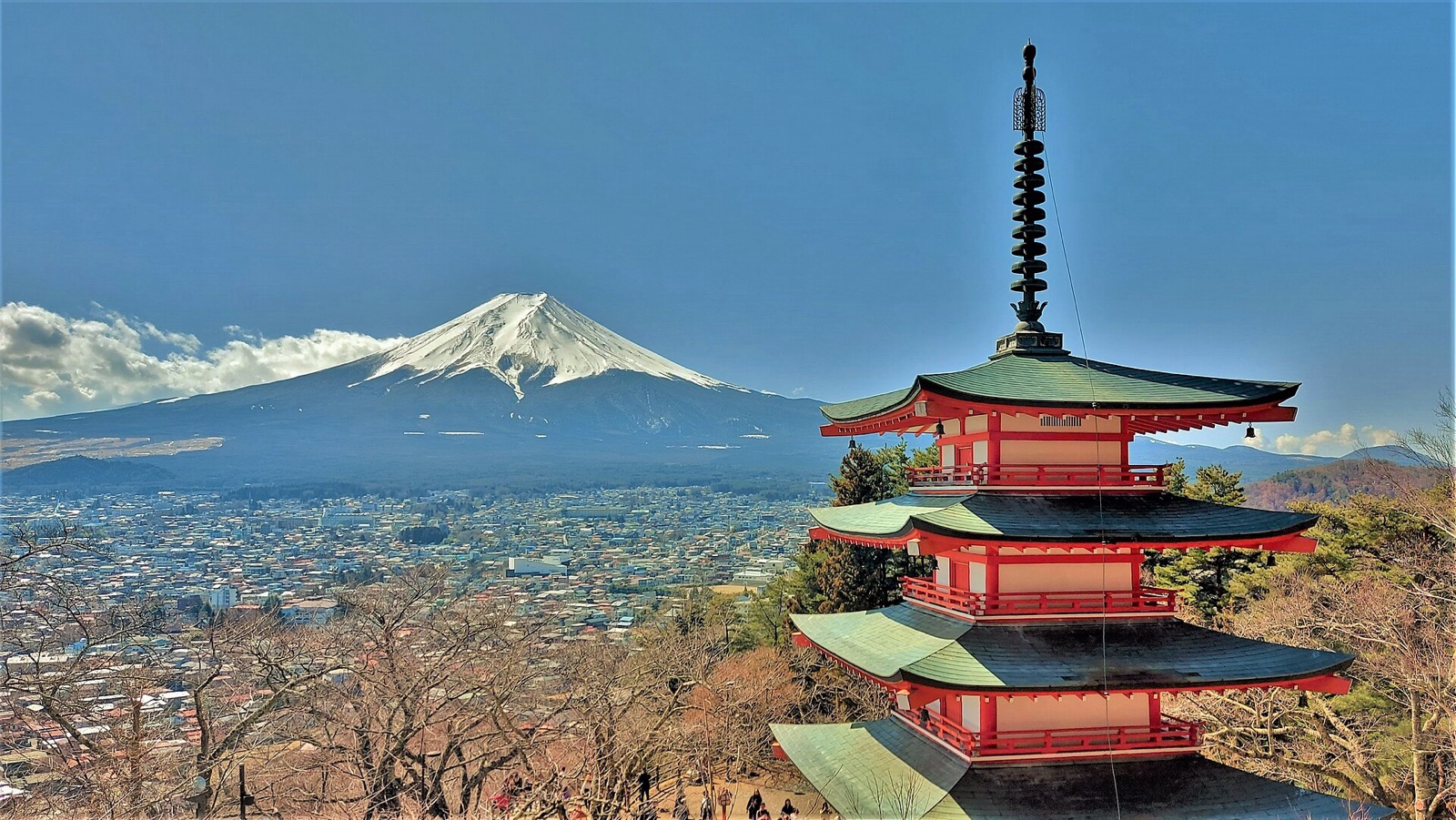
A Mount Fuji day trip is the strongest photo on any Japan tour. Hakone, two hours west of Tokyo, gives the best lake-and-cone views from Lake Ashi and the Owakudani volcanic valley. The 5th-station bus runs from Kawaguchiko up to 2,300 meters between July and September; outside that window, viewing-only tours from Chureito Pagoda are reliable year-round.
The shinkansen network connects every major Japan tour stop with 320 km/h trains running every 10 minutes during peak hours. A 7-day JR Pass costs around €230 in 2026; a 14-day pass is €370. Browse hiking tours on FindToursIn for Fuji-summit climbs and nature tours for the Japan Alps and Shirakawa-go.
6. Japan Tour Pricing in 2026
Standard prices for 2026 Japan tours fall into three brackets:
- Half-day group walking tour in Tokyo or Kyoto: €60-€120
- Full-day private guide with transport: €220-€260
- Two-week guided multi-city package: from €3,800
Many operators offer a discount for cash payment in person, but the lower price comes with weaker cancellation protection. Compare plans for tour agencies if you operate Japan experiences yourself; FindToursIn lists agencies under a flat monthly fee with zero booking commission.
7. What to Pack for a Japan Tour
Temple etiquette and seasonal swings matter more than most travelers expect. Pack:
- A light layer plus a windproof shell for shinkansen platforms and shrine grounds
- Easy-off shoes that slip on and off for temple and ryokan entry
- A small daypack for the daily haul of station bento and konbini snacks
- A 1-liter water bottle, a power bank, and small bills for shrine-donation boxes
Leave large suitcases at the hotel or send them ahead via Yamato Transport's takkyubin service. A small daypack with a camera, light scarf, and the JR Pass is enough on a travel day. Lonely Planet's Japan guide and National Geographic's Japan coverage cover lesser-known regions in detail.
Final Thoughts
The best Japan tours reward travelers who plan with care. A licensed guide, a sensible kit, and a JR Pass bought in advance turn the trip from a confused stamp-rally into a memorable two weeks through one of the world's most distinct cultures. Use our guide to choosing a tour agency to vet whoever you book with. For more ideas, see our travel blog or contact our team for a tailored Japan route.
Frequently Asked Questions
Are Japan tours worth it in 2026?
Japan tours are consistently rated among the world's top three cultural experiences by Lonely Planet and the Japan National Tourism Organization. The combination of ancient temples, world-leading rail, and food culture is unmatched anywhere else, and a good guide unlocks reservations that solo travelers struggle to secure.
How many days do I need for a Japan tour?
A focused Japan tour needs at least 10 days to cover Tokyo, Kyoto, Osaka, and one Mount Fuji day. A balanced two-week trip adds Hiroshima, Nara, and Hakone. Three weeks unlocks Hokkaido in winter or Okinawa in summer for a complete cultural and natural circuit.
What is the best month for a Japan tour?
The best months for a Japan tour are late March, April, October, and November. Cherry blossoms peak in early April in Kyoto and a few days later in Tokyo, while autumn maple foliage peaks in mid-November. Both windows deliver mild weather and the strongest photography conditions.
Can I do a Japan tour without renting a car?
Yes. The shinkansen, metro, JR lines, and local buses cover every major destination. The JR Pass gives unlimited rides on most JR-operated trains and is the simplest pass for first-time visitors. Renting a car only makes sense for rural Hokkaido or the Noto Peninsula.
Is Japan expensive in 2026?
Japan restaurant prices run €10-€40 per person for a standard sit-down lunch in Tokyo or Kyoto, with sushi omakase and kaiseki menus at the upper end. Konbini meals under €6 and standing ramen counters under €8 are easy to find in every neighborhood.
What should I wear on a Japan tour?
Smart-casual dress works for restaurants and most shrines. For temple and ryokan entry: shoes that slip off easily, no street footwear past the genkan. Sturdy walking shoes are essential everywhere because the average Japan tour day covers 12 to 18 kilometers on foot.
Curated travel content from our team of travel enthusiasts. We help you discover the best tours and destinations worldwide.
Ready to explore?
Find curated tours from verified local agencies — contact them directly, no booking fees.
Explore tours