
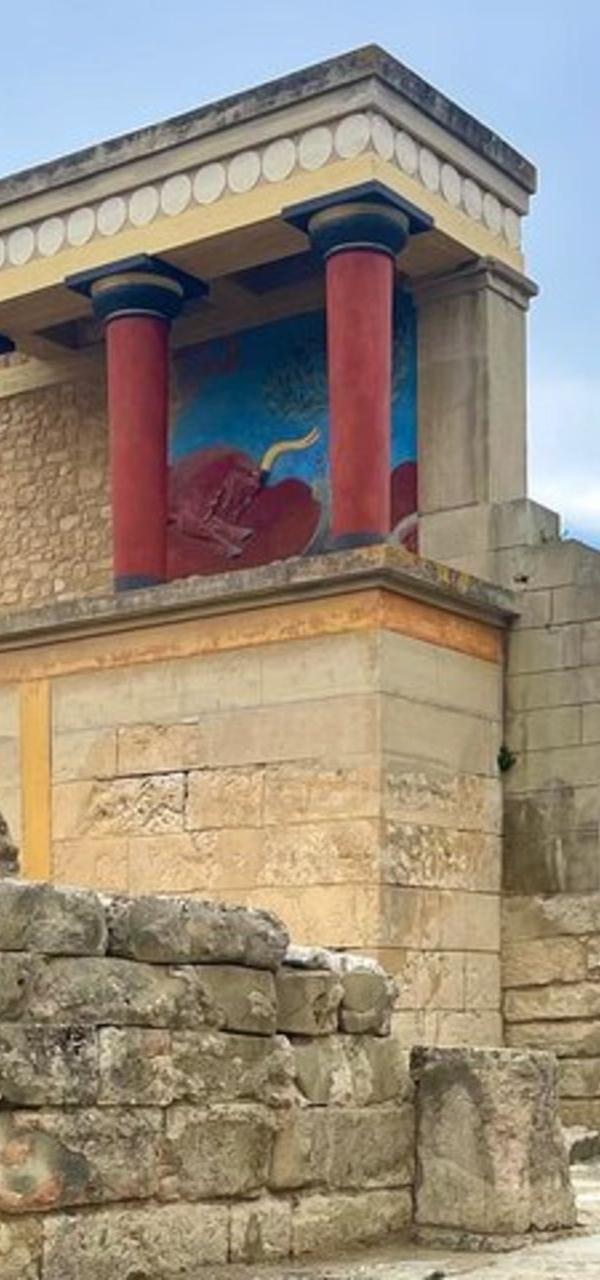
Knossos is the centre of Bronze-Age Minoan civilisation, the oldest city in Europe and the source of the Minotaur and Labyrinth myths. Excavated and partially reconstructed by Sir Arthur Evans starting in 1900, the palace covers 20,000 square metres of throne rooms, frescoed apartments, and elaborate plumbing that pre-dates Roman engineering by 1,500 years. The famous Bull-Leaping fresco and the Throne Room are the headline stops; pair the visit with the Heraklion Archaeological Museum, which holds the original frescoes and most of the Minoan artefact collection.
Ticket
€15 (combined Heraklion Museum: €20)
Visit time
2–3 hours; pair with the Heraklion Museum for a full day
Type
archaeological
When to visit
Early morning April–October; midday on the rock is fully exposed in summer
Skip-the-line tip
Knossos pre-bookings via the official Hellenic Heritage online ticket portal save 30–60 minutes of summer queueing. Avoid mid-day arrival in July–August; the site has limited shade.
Tours including Palace of Knossos
Frequently asked questions
How much does Knossos cost?
Knossos entry is €15 (€8 reduced). A combined ticket with the Heraklion Archaeological Museum is €20 and includes both the site and the museum where most original Minoan artefacts are displayed.
Is Knossos worth visiting?
Yes — it is the most significant archaeological site on Crete and among the most important in Europe. The reconstructed sections are controversial among purists but make the layout legible to non-specialists. Plan 2–3 hours.
How do I get to Knossos from Heraklion?
Knossos is 5 km south of Heraklion, reachable by city bus #2 from the central station (every 20 min, €2) or by taxi (€10–12). Most guided Crete tours include hotel pickup.
When is the best time to visit Knossos?
April–May and September–October for ideal temperatures and lighter crowds. Summer is doable but plan an 8am opening arrival. Winter access is limited but possible — fewer crowds, intermittent rain.